

The Gothic Resurrection: Why the McQueen Skull is the Ultimate Revival
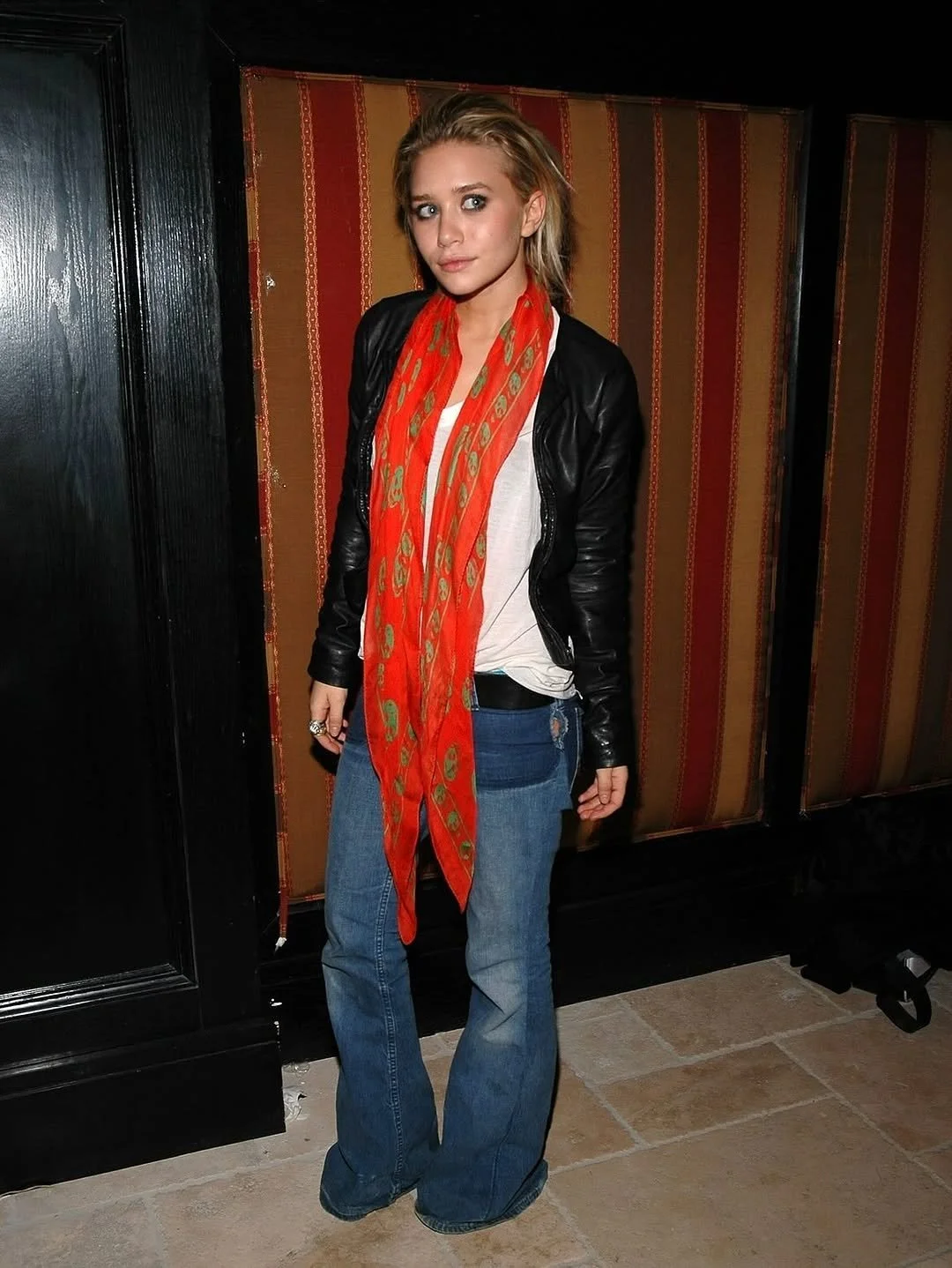
Ashley Olsen (Photo by Rabbani and Solimene Photography/WireImage).
In the volatile ecosystem of the fashion cycle, few motifs possess the haunting, perennial pull of the Alexander McQueen skull. It feels like a permanent fixture of the fashion lexicon — and yet its origins are rooted in a single, electric moment of radical creativity.
That moment arrived on the Spring/Summer 2003 'Irere' runway: a shipwreck fever dream, salt-bleached and violent in its beauty. From its debut on those wave-worn boards, the silk chiffon skull scarf became the chicest dose of dark romanticism a wardrobe could own. More than two decades later, it remains exactly that — and the cultural tide is bringing it back with fresh urgency.
THE MOTIF
Memento Mori, Made Luxurious
At its core, the skull is the ultimate memento mori — from the Latin, “remember that you must die.” The phrase originated in ancient Rome as a ritual humbling of triumphant generals: even at the peak of glory, mortality waits. Over centuries, the concept moved through vanitas still-life paintings, mourning jewellery, and Baroque allegory, accumulating layers of meaning with each era it passed through.
In the hands of Lee McQueen, it became something altogether more charged. McQueen described his aesthetic as one of “sublime horror” — a deliberate collision of beauty and dread that ran as a continuous thread through his career, from the raw-edged tailoring of his Central Saint Martins graduate collection to the otherworldly theatrics of Plato’s Atlantis. By rendering the skull in liquid silk and whisper-weight chiffon, McQueen did something quietly radical: he domesticated death, transforming a symbol of our universal end into a vehicle for grace, desire, and style.
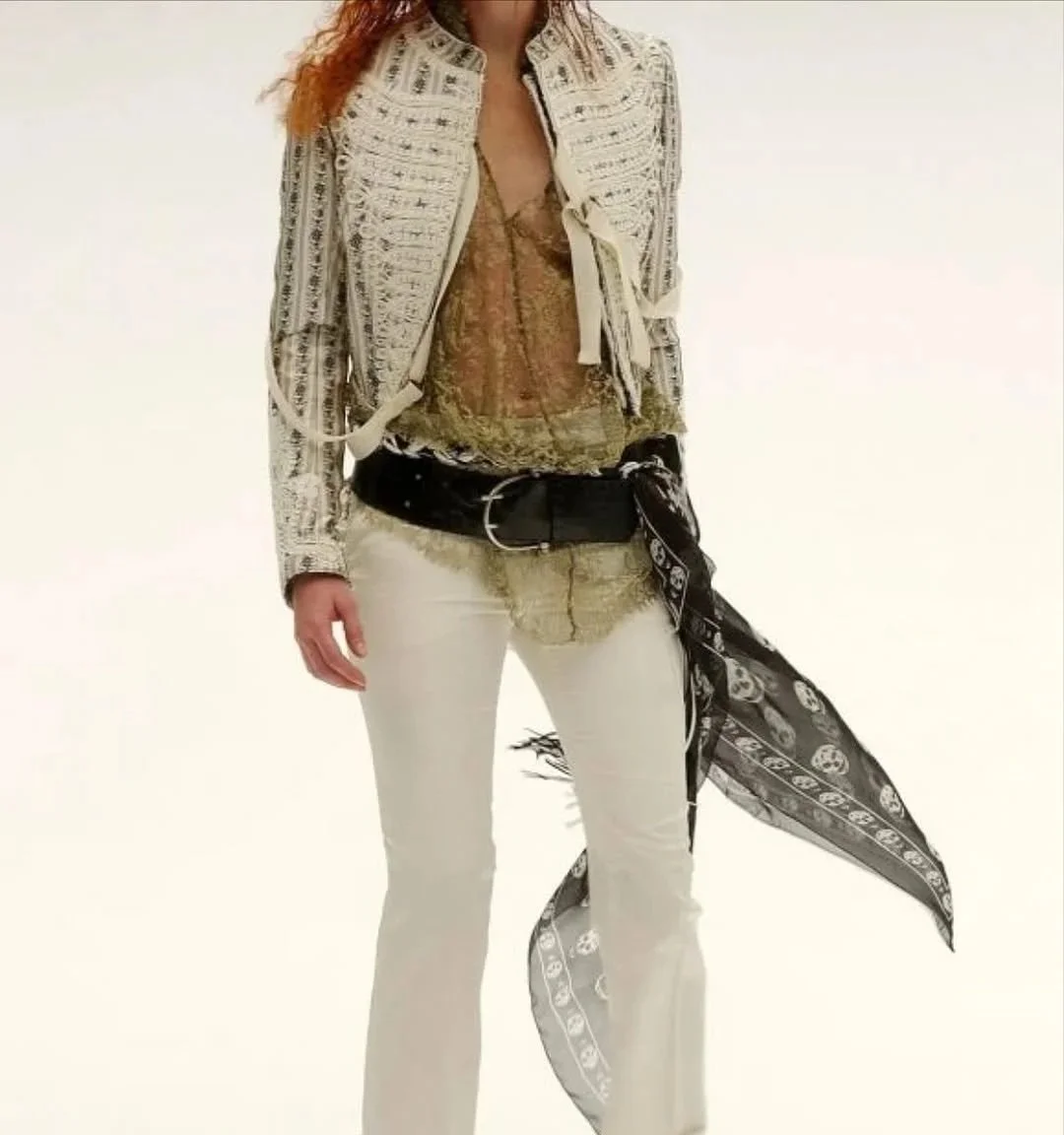
Alexander McQueen skull motif chiffon scarf from the Spring 2003 "Irere" collection.
The silk chiffon scarf — those repeating skulls set against grounds of ivory, red, black, or grey — was the most portable expression of this philosophy. An accessory that could be wrapped, draped, tied, or left to trail; worn with everything from a bias-cut slip to a leather jacket and flares. To own one was to carry a piece of the philosophy with you.
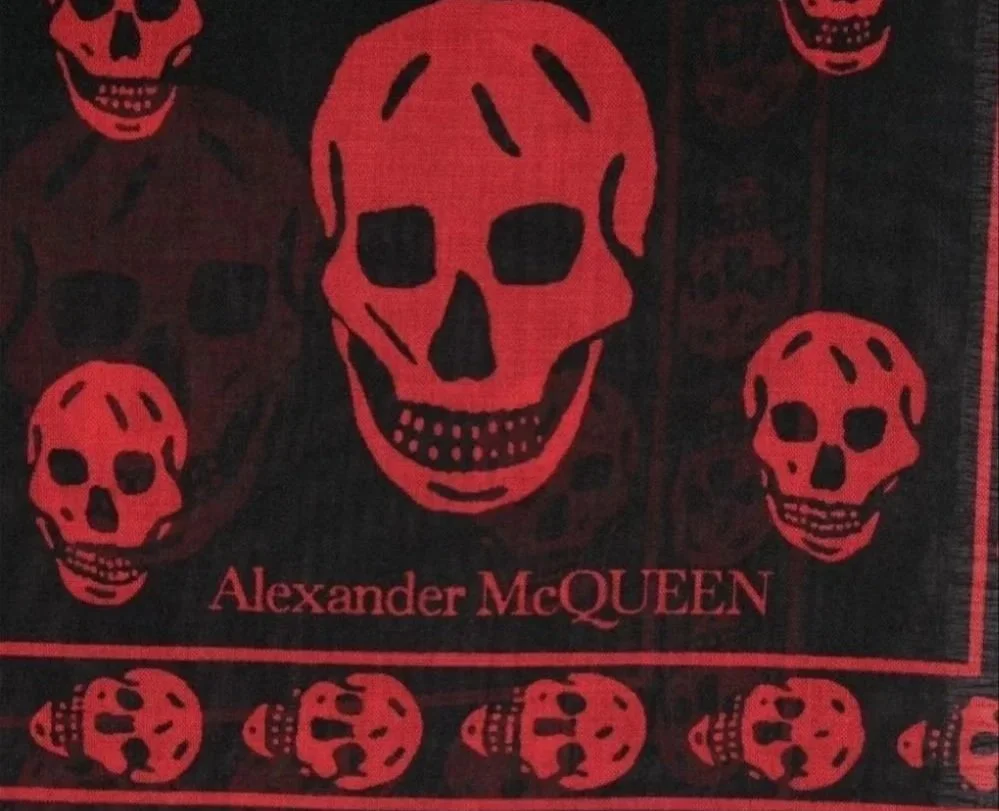
Alexander McQueen black and red skull print modal-silk blend scarf.
THE ARCHIVAL ECHO
Kate Moss & the Dress That Started It All
Before the scarf became a street-style staple, the skull print existed in its most elemental, uncompromising form: the sheer chiffon dress worn by Kate Moss at McQueen’s 2004 Black show. It was a garment of almost transgressive transparency, the gold-embroidered skulls catching the light like armour over bare skin — and Moss wore it with the particular ease that only she possessed.
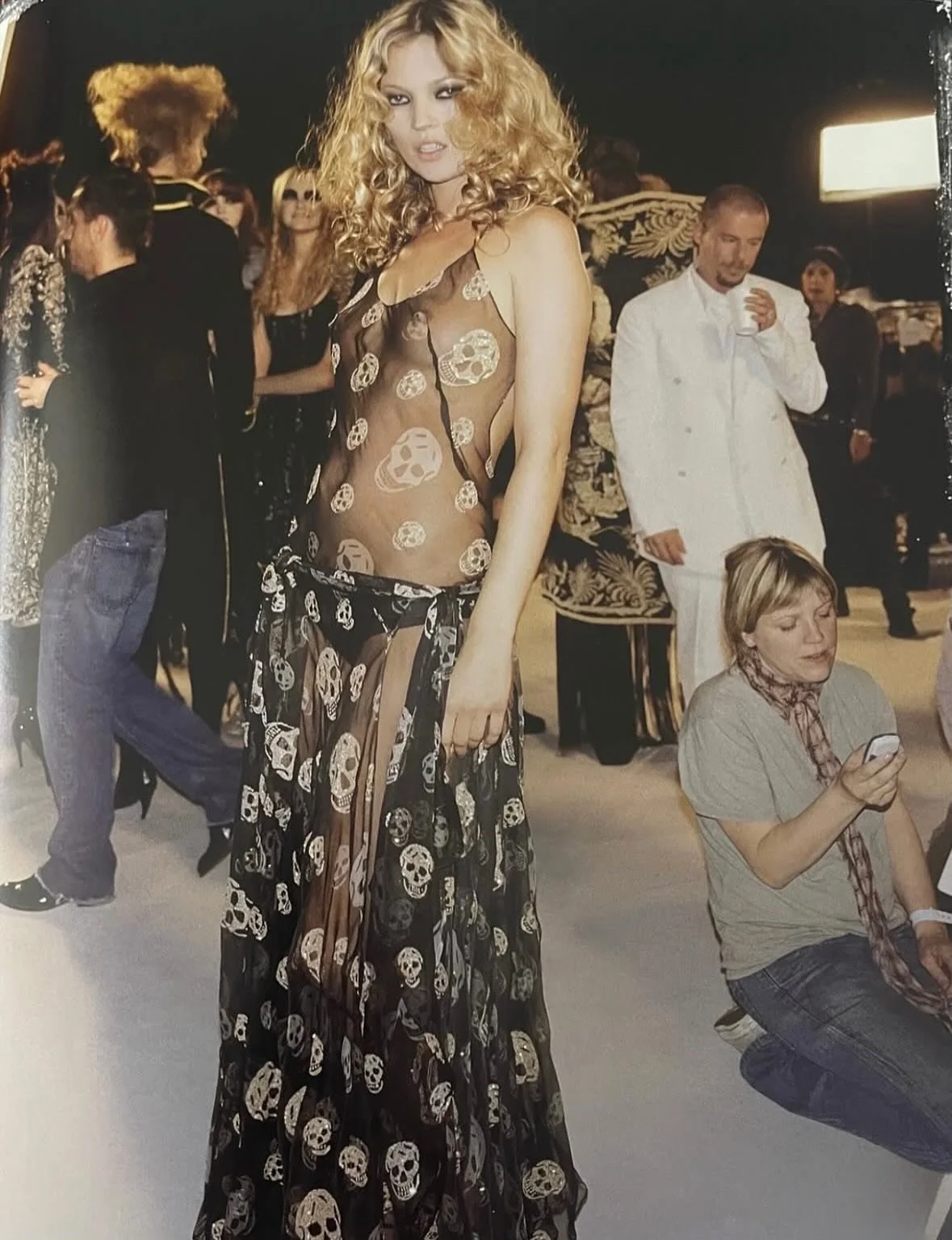
Kate Moss, McQueen Black show, 2004.
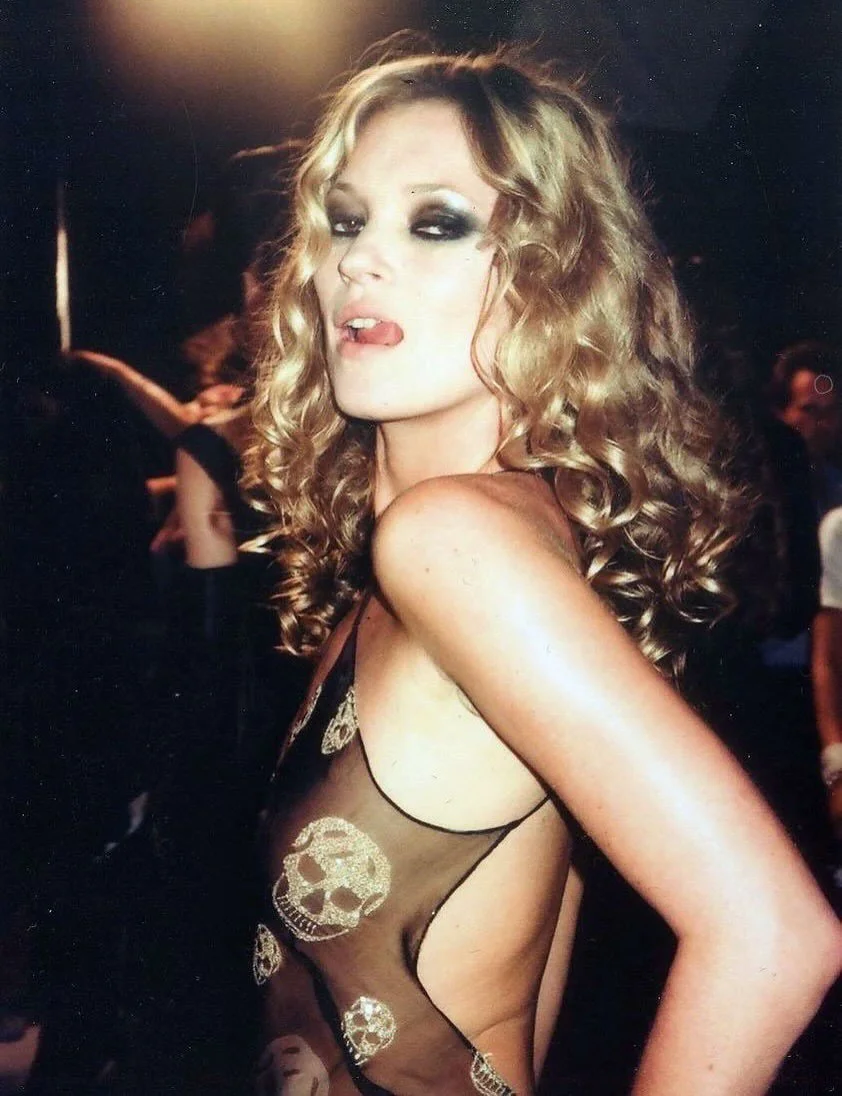
Kate Moss, McQueen Black show, 2004.
The images are seared into fashion memory: Moss in the sheer skull dress, smoke-eyed and luminous, caught between the archival and the eternal. They are the originating myth from which everything that follows descends.
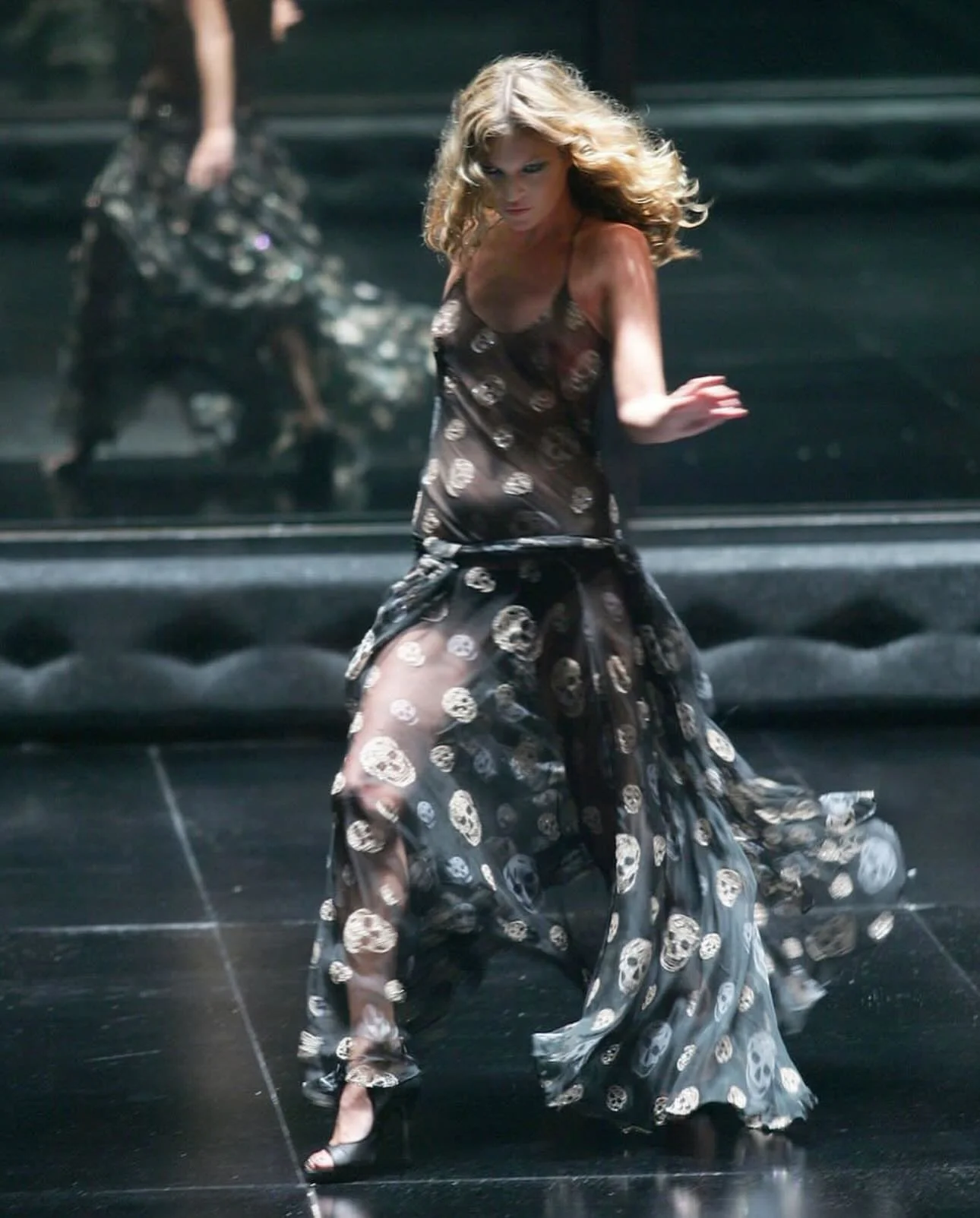
Kate Moss, McQueen Black show, 2004.
The catalyst for this latest resurgence arrived in the form of a single, precisely calibrated appearance. Styled by Andrew Mukamal, Margot Robbie stepped out in a sheer chiffon slip saturated with the iconic skull print — a silhouette suspended between a 1930s bias-cut and a 90s grunge staple, as though it had been pulled from a time outside time. The reference was unmistakable: a direct nod to Moss, to that dress, to that mythology.
By mirroring Moss’s effortlessly undone aesthetic, Robbie didn’t simply wear a dress. She performed a stylistic séance, bridging archival history and contemporary star power.
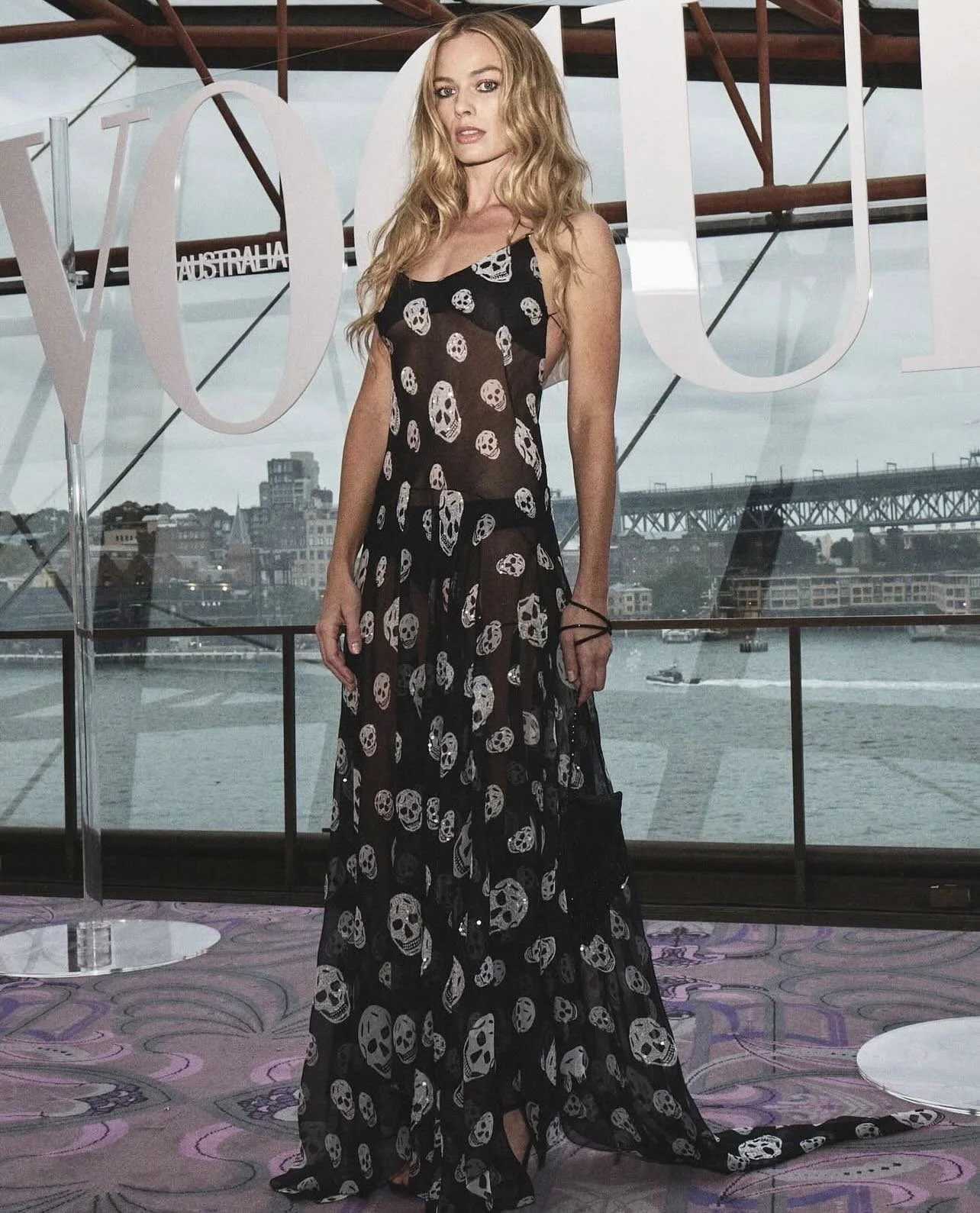
Margot Robbie in Alexander McQueen skull dress, Vogue Australia.
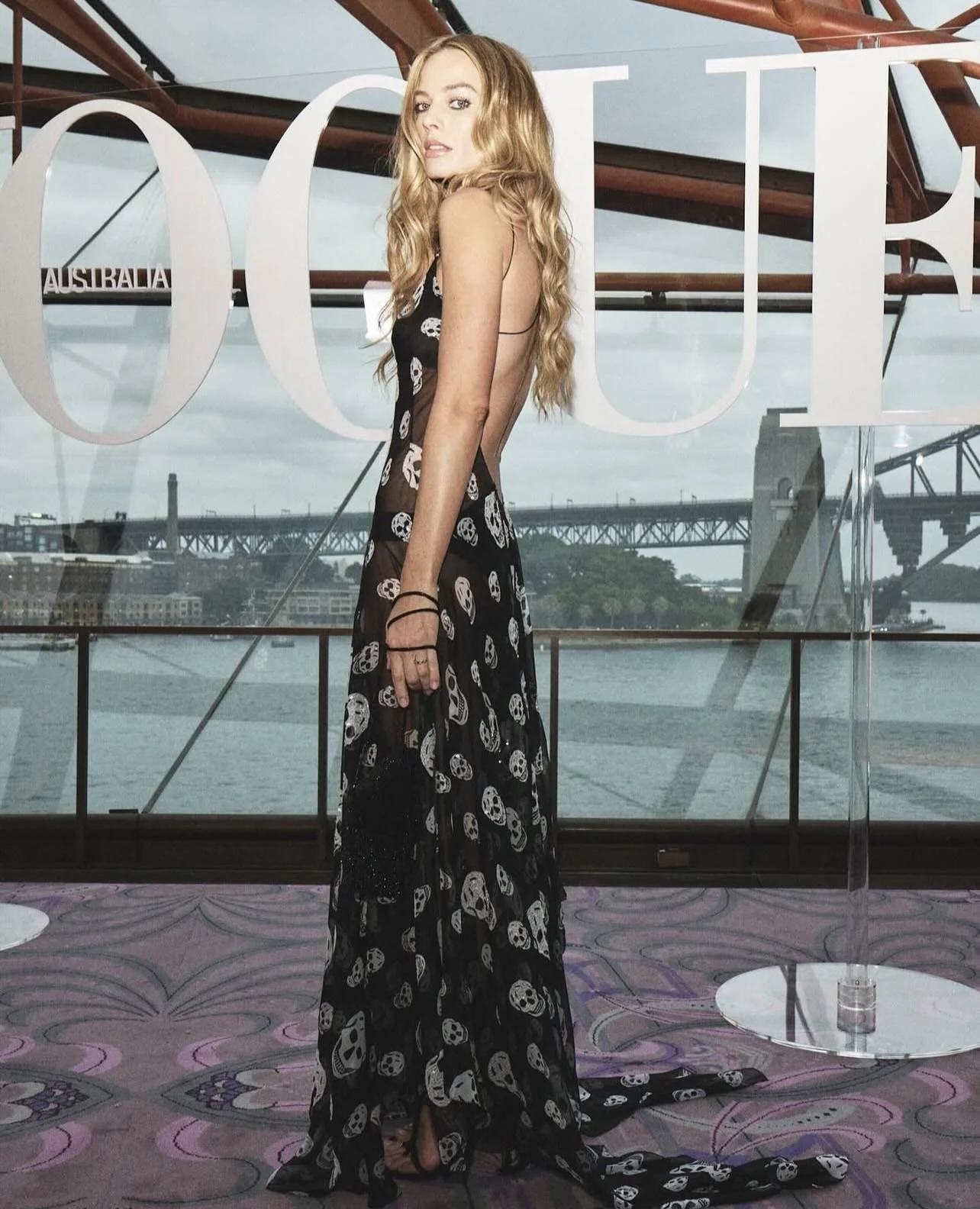
Margot Robbie in Alexander McQueen skull dress, Vogue Australia.
THE NOUGHTIES ARCHIVE
From It-Girls to the Paparazzi Generation
While the dress existed in the rarefied atmosphere of shows and red carpets, it was the silk scarf that democratised the skull — bringing it into the everyday wardrobes of the paparazzi-hunted elite. The mid-2000s were the scarf’s golden era. It became the defining accessory of a generation of women who understood that the most powerful styling was also the most effortless.
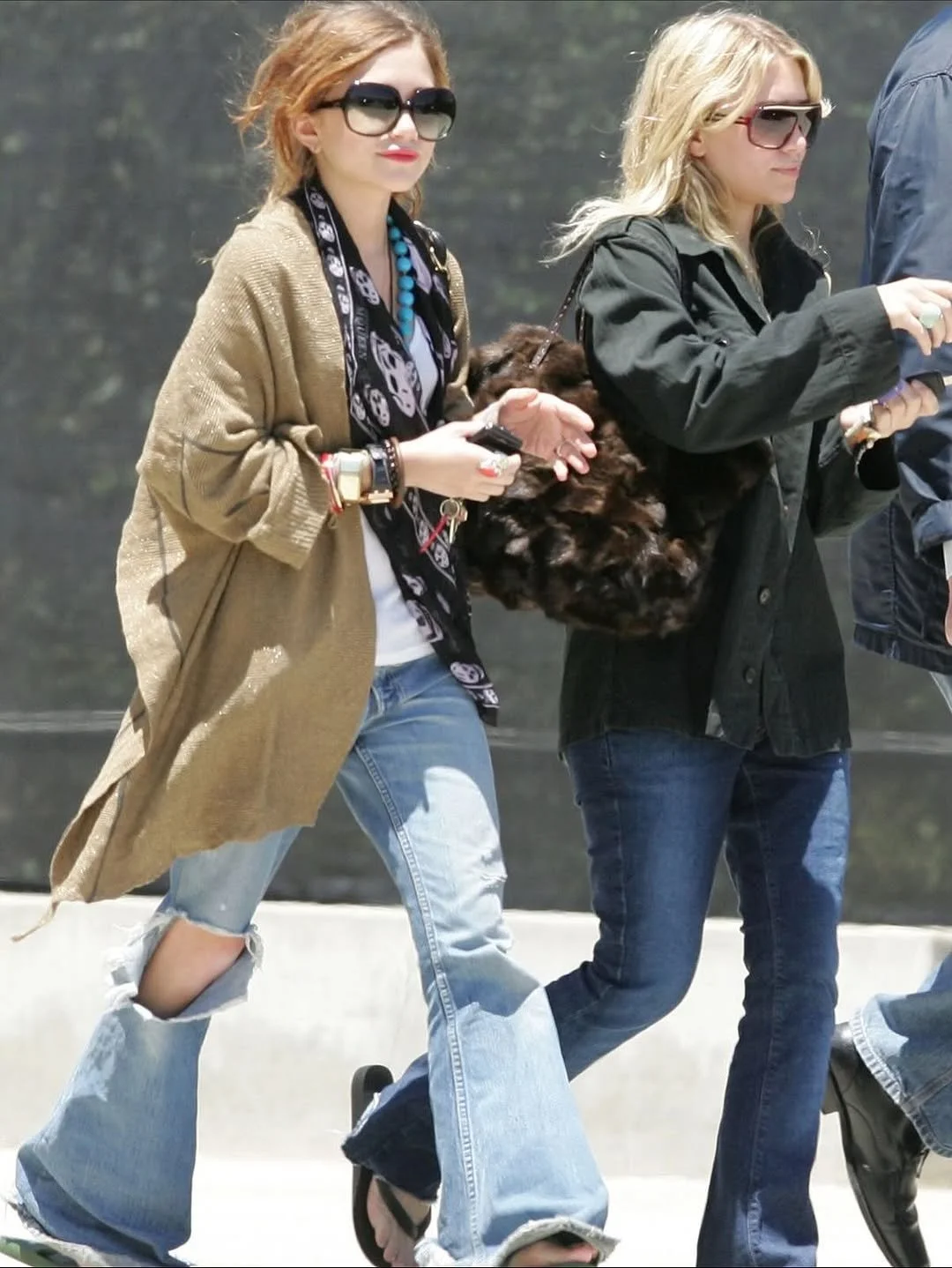
Mary-Kate & Ashley Olsen (BG033/Bauer-Griffin).
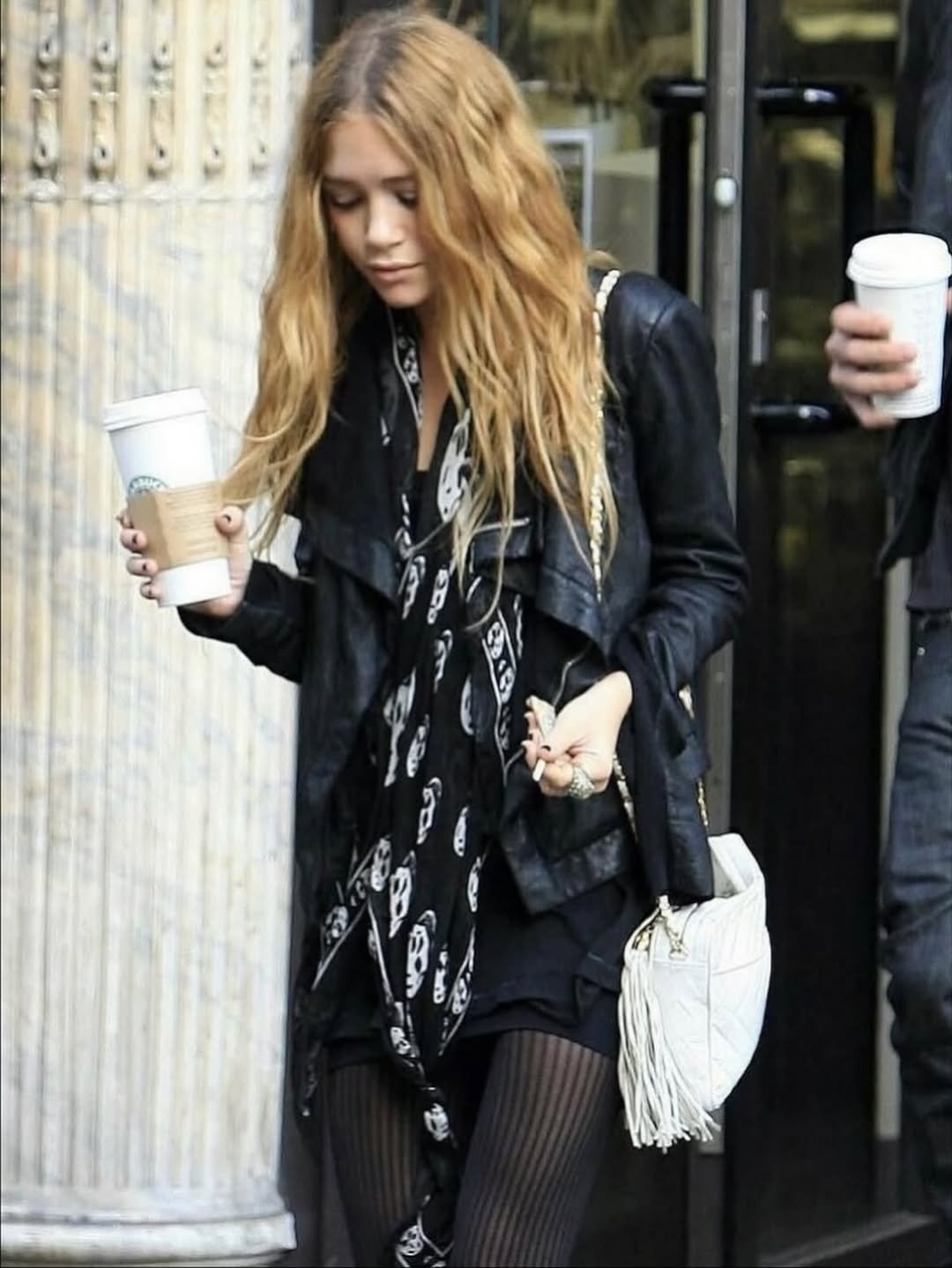
Mary-Kate Olsen in Alexander McQueen skull scarf.
The Olsen twins were its most devoted disciples, building entire looks around the scarf’s flowing silk — layered over leather, draped beneath oversized coats, left to trail against distressed denim. They wore it with the instinctive understanding that it needed no accompaniment.
Nicole Richie became the scarf’s most ethereal protagonist, often seen cocooned in the bohemian, blood-red version. She styled it with a studied nonchalance—looped loosely over simple tank tops or layered amidst a chaotic wealth of vintage jewelry—embodying that specific West Coast "Boho-Chic" that redefined luxury as something lived-in and slightly undone.
Conversely, Kim Kardashian utilized the motif with a more graphic, intentional sharpness. She famously anchored the white-on-black skull print against monochromatic leather silhouettes, using the scarf’s repeating pattern to provide a focal point of high-contrast precision. Even then, she demonstrated an early mastery of the "luxury-as-armor" aesthetic that would later become her entire stylistic identity. For Richie, the scarf was a soft, flowing texture; for Kardashian, it was a crisp, visual punctuation mark.

Nicole Richie shopping in McQueen skull scarf.
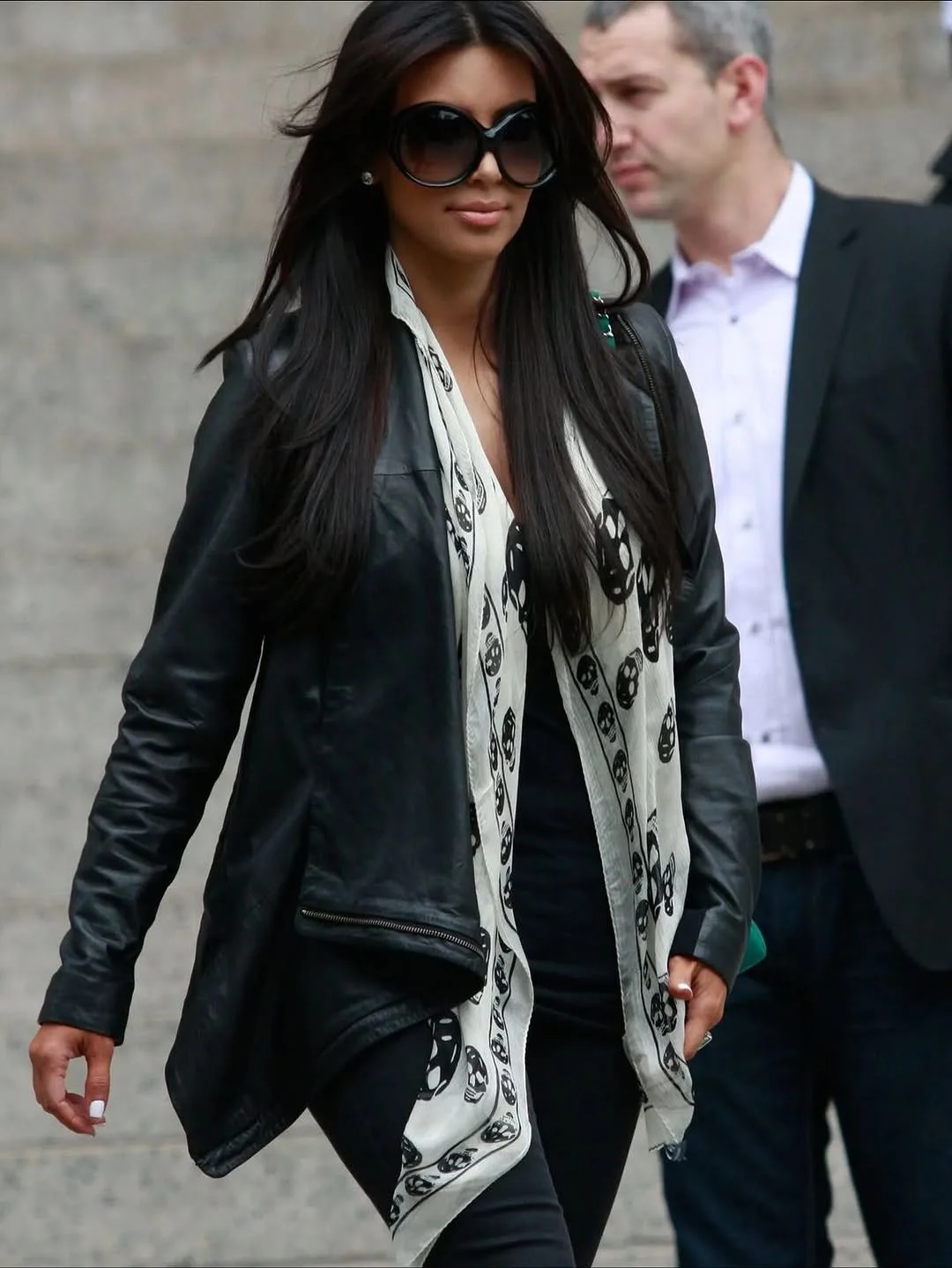
Kim Kardashian in 2011 (James Devaney).
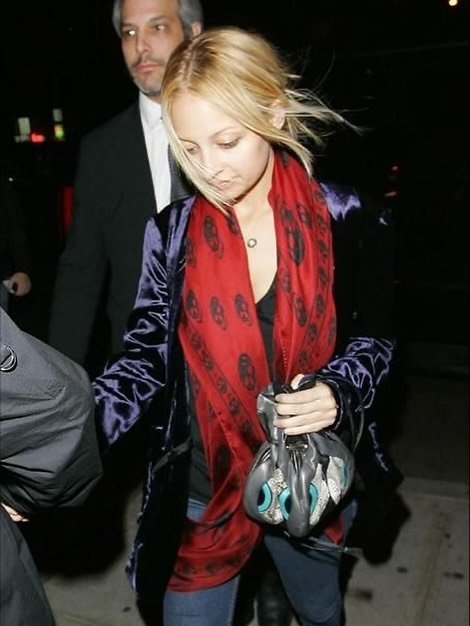
Nicole Richie in McQueen skull scarf.
THE REVIVAL
The New Vanguard
Today’s revival is different in character. It is not nostalgic in the passive sense — it is active, referential, and deliberate. A diverse vanguard is carrying the skull forward, each bringing their own context to the print:
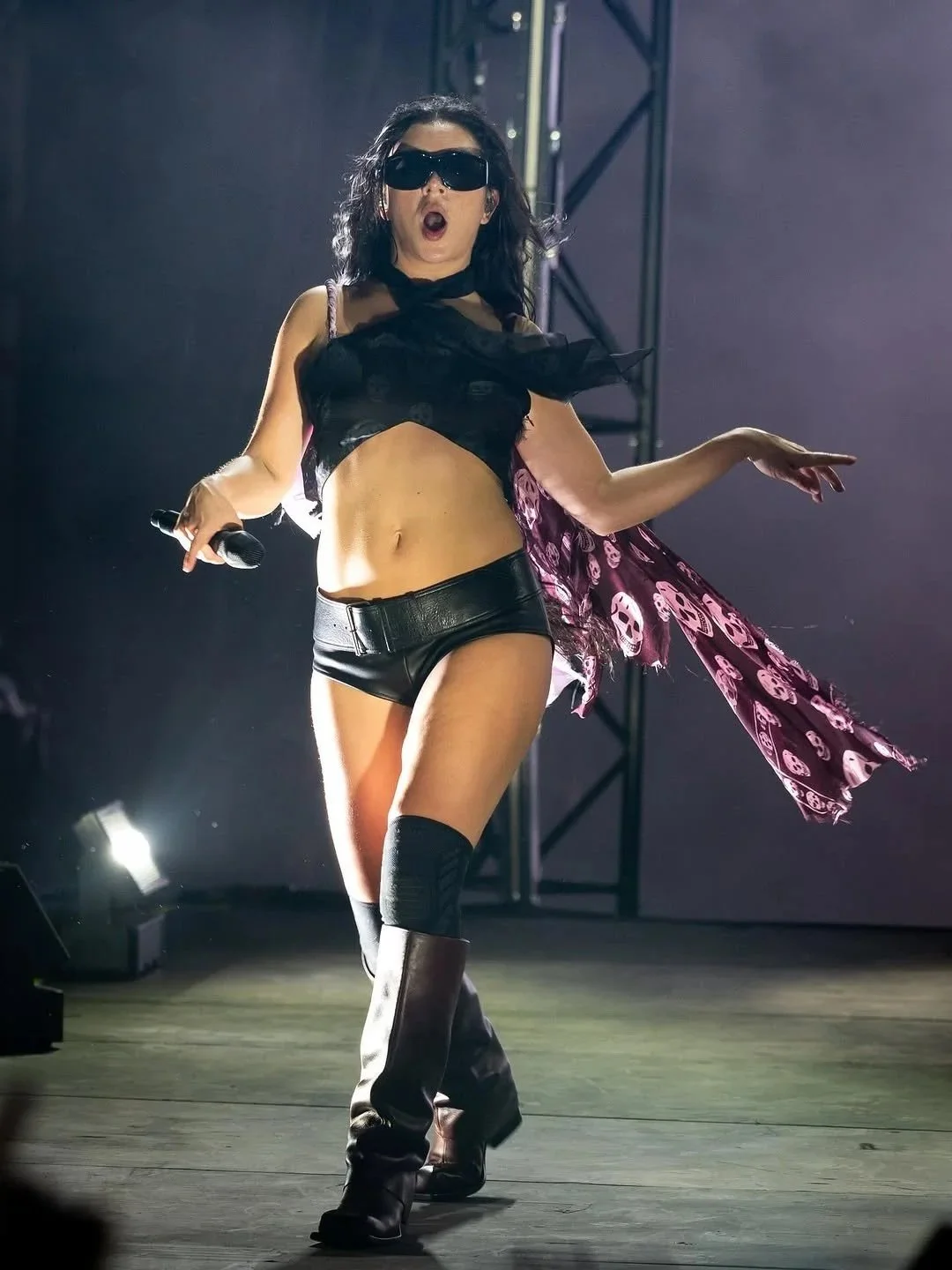
CHARLI XCX
The architect of Brat has been instrumental in this aesthetic pivot. Headlining Glastonbury Festival 2025, she was draped in a custom Alexander McQueen top crafted from black skull-printed silk chiffon and georgette. Paired with belted black leather shorts and a chaotic layering of skull scarves in burgundy and lilac, the look translates the 2010s Tumblr aesthetic into a contemporary Indie Sleaze manifesto.
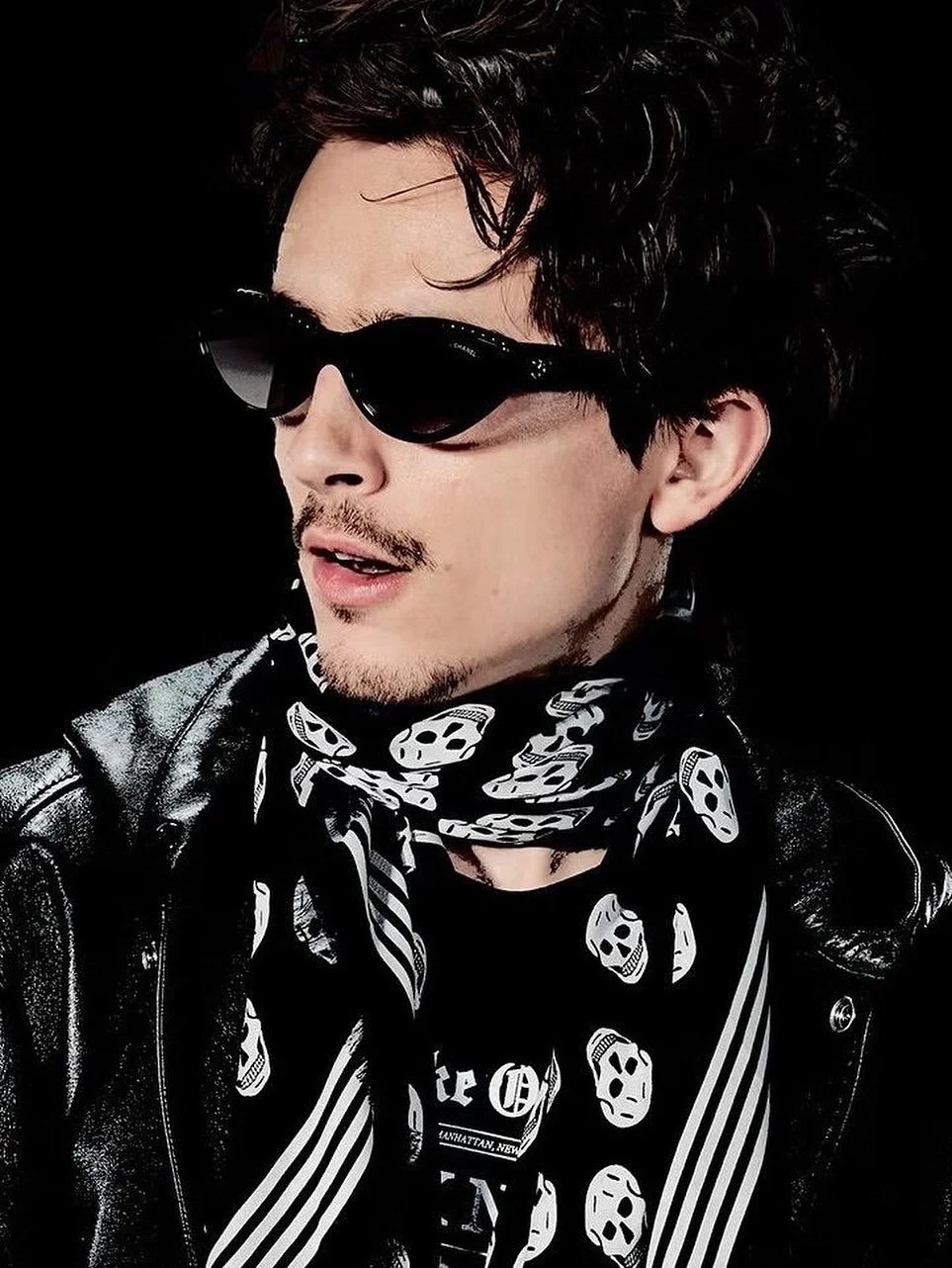
TIMOTHÉE CHALAMET
Seen wearing the skull scarf knotted close to the throat, paired with a Yankees bomber jacket and backward cap — an improbable combination that somehow resolves into perfect coherence. Chalamet’s adoption brings a Neo-Dandy fluidity to the print, a quiet argument for the motif’s gender-neutral potency.
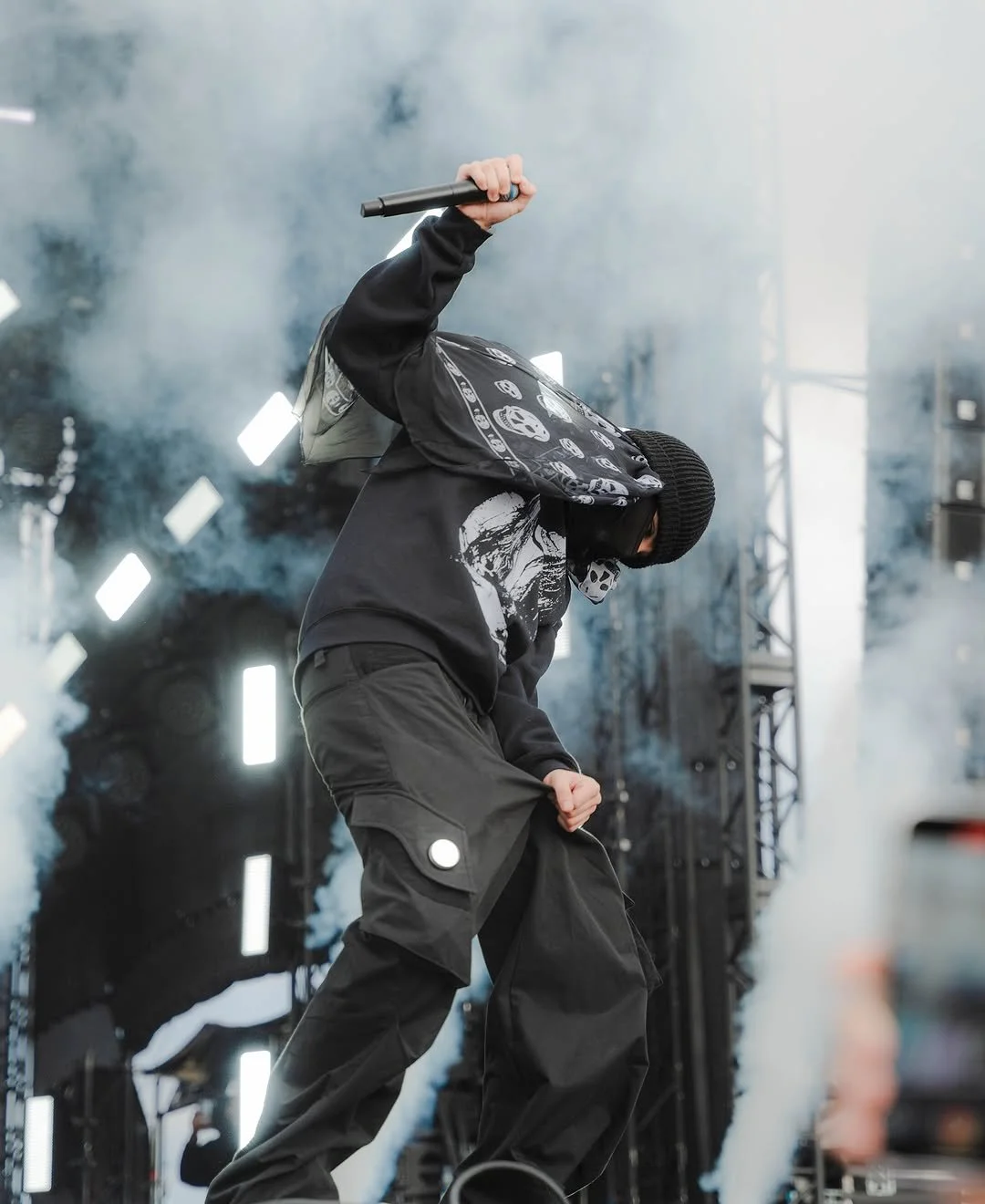
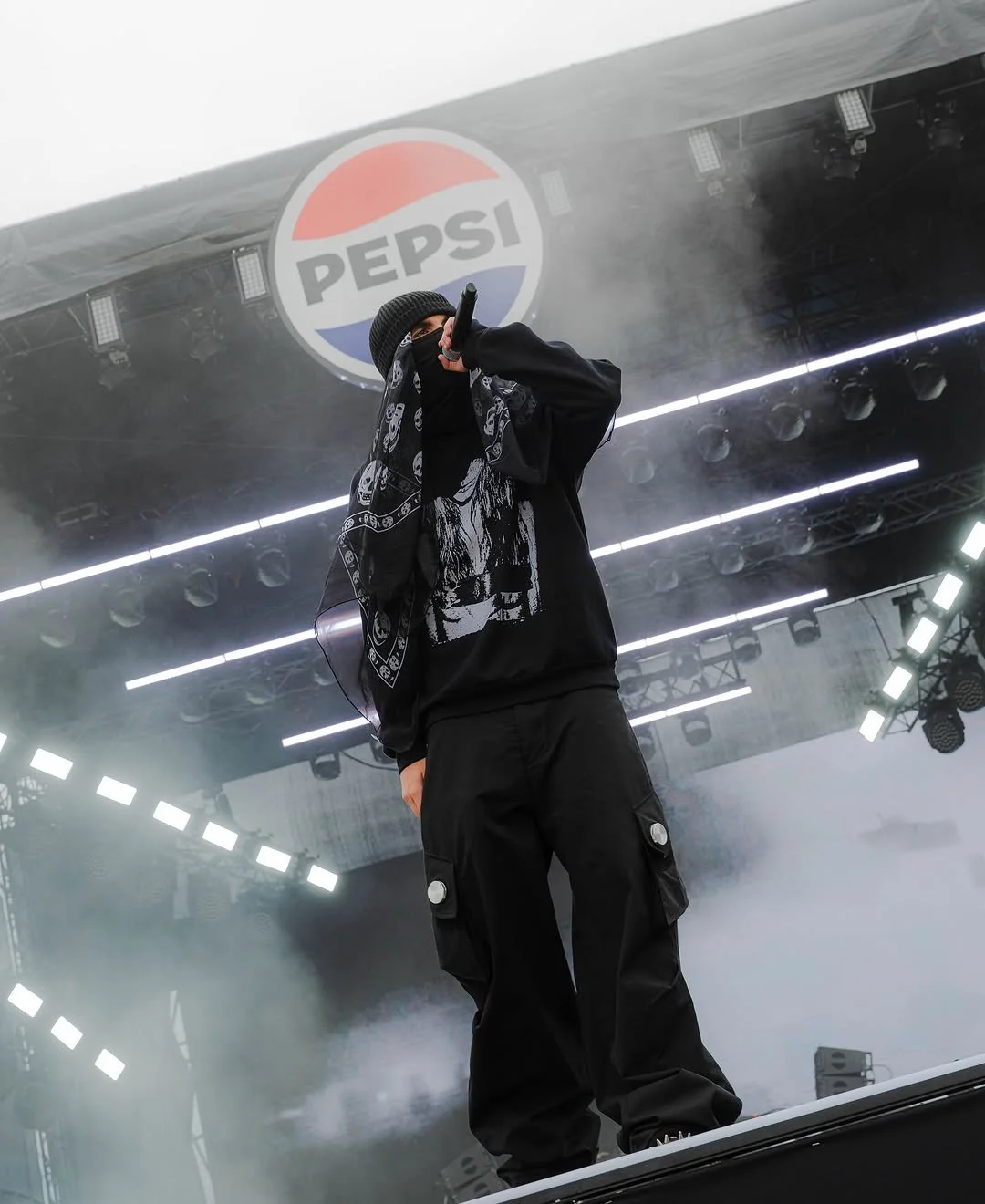
ESDEEKID
The skull scarf worn as a face mask mid-performance — obscuring, concealing, transforming. This is the print at its most raw and archival, deployed as both costume and statement. McQueen as cultural artifact, worn with the ceremony it deserves.
ADDISON RAE
The skull in sunlight, at the Trevi Fountain, in pink — a high-contrast image that proves the print’s range is infinite. Where others lean into darkness, Rae shows that the skull can anchor lightness too. Memento mori in the most beautiful city in the world: there is no more appropriate backdrop.

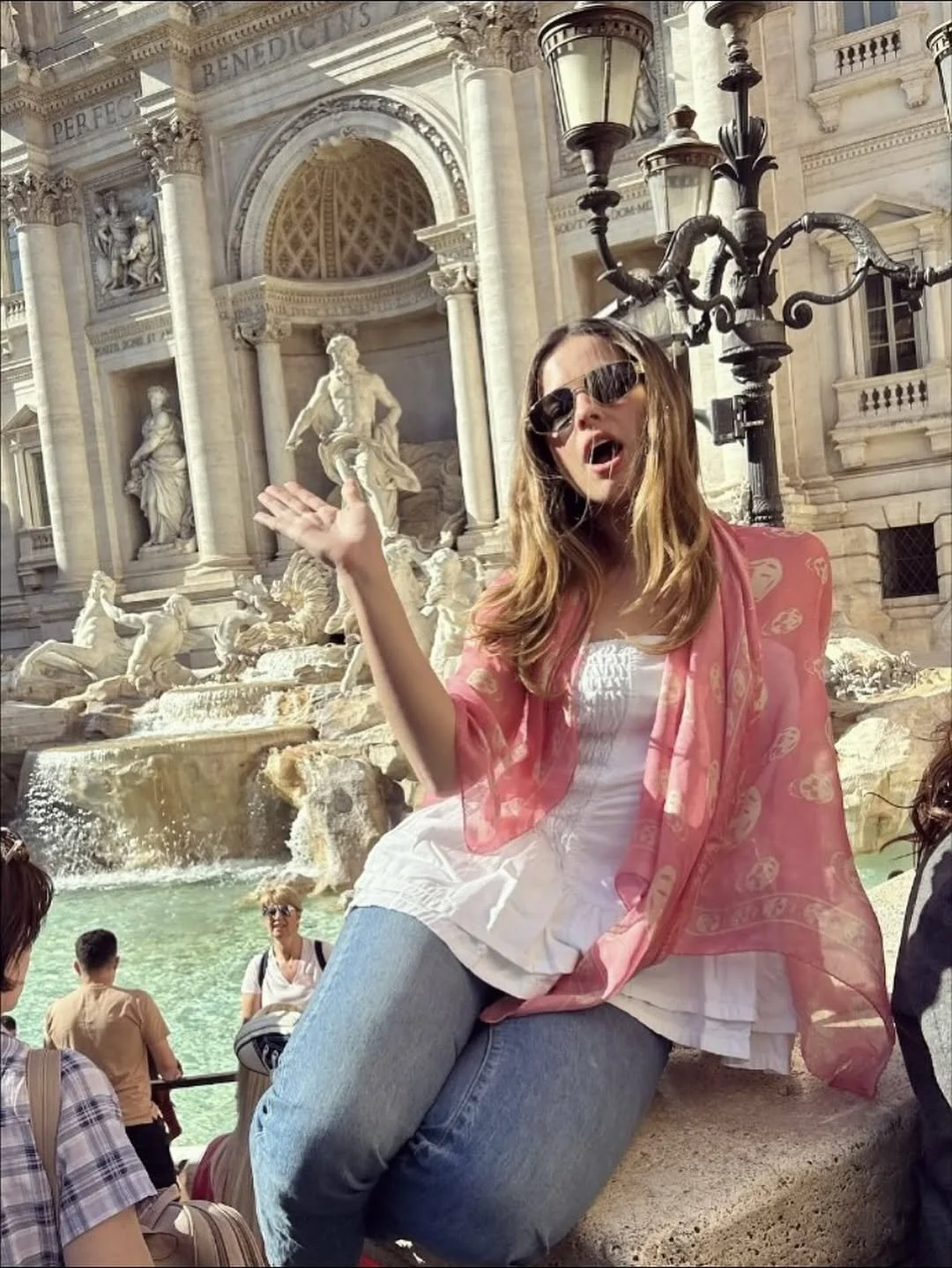
The skull represents the intersection of high art and street rebellion — a duality that Lee McQueen mastered, and that no other house has since claimed.
THE MOMENT
Why the Skull, Why Now?
The resurgence isn’t purely nostalgic — though nostalgia is part of its power. It reflects something more structural: a collective turning away from the sterile restraint of “Quiet Luxury,” which dominated the cultural mood for the better part of a decade. As that aesthetic cools, designers and consumers alike are reaching for the emotive, the theatrical, and the slightly dangerous. There is a hunger — visible across recent runway calendars — for what might be called Dark Romanticism: beauty that acknowledges darkness, luxury that is not afraid of itself.
The McQueen skull was always the most articulate visual shorthand for exactly this. Whether appearing on the silk chiffon of a 2003 scarf, the delicate sheer structures of mid-noughties couture, or the oversized tailoring of today’s contemporary wardrobe, it carries its meaning intact: a reminder that the most powerful beauty is the kind that knows it cannot last.
Lee McQueen understood that better than anyone. The skull endures because, in the end, it always tells the truth.
